
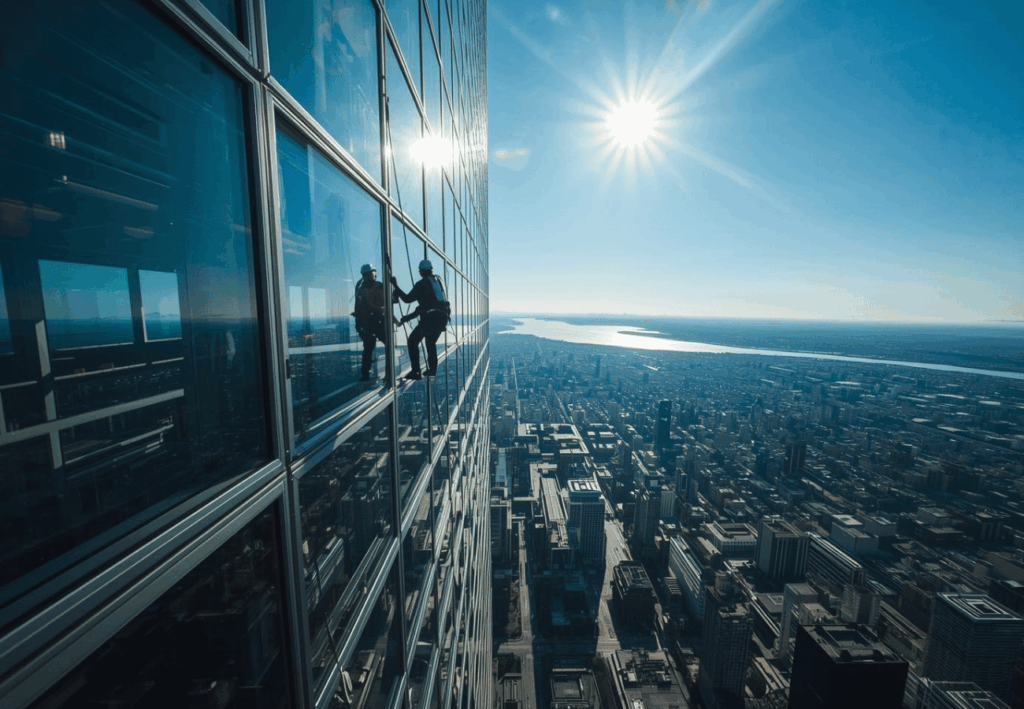
High-rise window cleaning means washing the outside windows of very tall buildings – think skyscrapers, high-rise apartments or office towers often hundreds of feet above ground. It’s not like cleaning home windows. Special teams of trained professionals handle it using ropes, platforms, and other heavy equipment instead of ladders or step stools. In short, high-rise window cleaning is a specialized, safety-first service for multi-story buildings, requiring the right tools, training, and precautions to reach windows that are far up in the sky.
How High-Rise Window Cleaning Is Different: Cleaning a skyscraper’s windows is much more complex than cleaning a storefront. Key differences include:
- Height & Access: Workers must reach dozens of stories up. Climbing or rappelling down a tall façade is hard and dangerous without the right rigging.
- Strict Safety Protocols: Every cleaner uses a full-body harness, ropes or lifelines, and anchored points on the roof. These fall-protection systems (required by OSHA guidelines) are essential to prevent accidents.
- Specialized Equipment: Instead of a simple ladder, teams use things like bosun’s chairs (suspended seats), motorized scaffolds (swing stages), aerial work platforms or “cherry pickers,” and even drones for hard-to-reach spots. They also use long water-fed poles for lower sections.
- Weather Sensitivity: Wind, rain, or ice can halt the job. Strong gusts or slippery conditions make high-up work especially unsafe.
These factors mean only experienced crews can do high-rise jobs. Property managers and building owners rely on this service to keep their buildings clean and safe.
Equipment and Methods Used
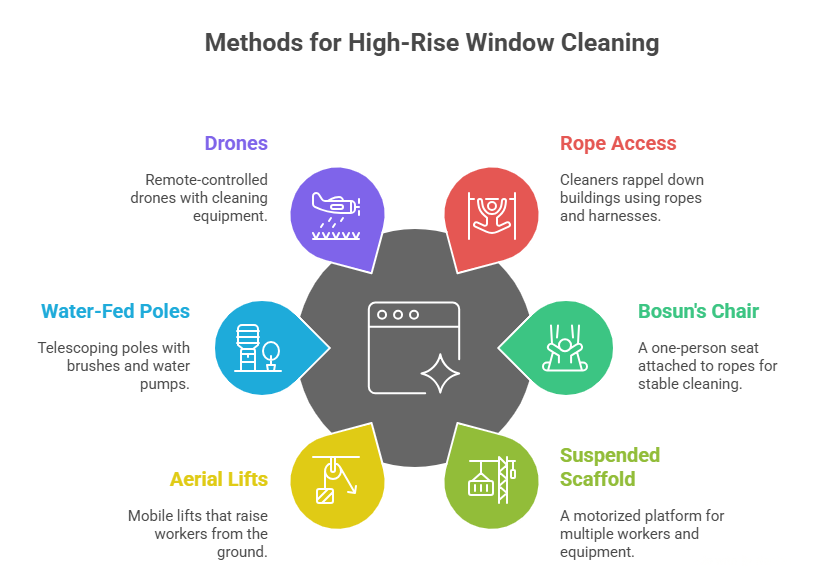
High-rise window cleaning crews typically rappel down the building or ride on suspended platforms to wash each window. Common methods include:
- Rope Access (Rappelling): Cleaners wear harnesses and are lowered on ropes from the roof. This lets them reach windows on buildings without exterior walkways or built-in platforms.
- Bosun’s Chair: A one-person seat attached to ropes. The worker sits in the chair and is raised or lowered along the building façade. It’s safer and more stable than just hanging from a rope.
- Suspended Scaffold (Swing Stage): A motorized platform that holds several workers and their equipment. It’s hung by cables from the roof and can move up or down the building. Useful for cleaning many windows at once.
- Aerial Lifts / Cherry Pickers: Mobile boom lifts or scissor lifts that raise workers to the needed floors from ground level. These are often used for mid-height buildings or areas where the ground equipment can safely reach.
- Water-Fed Poles: Telescoping poles with a brush and water pump (often with purified water) are used from the ground to clean lower floors or where rope work is impractical.
- Drones: Newer technology uses remote-controlled drones equipped with sprayers and brushes. Drones can clean glass and facades on very tall or unusual buildings, reducing risk to people.
Each method uses heavy-duty gear designed for high-altitude work. For example, cleaning teams bring steel or nylon ropes, anchor systems, bosun’s chairs, safety harnesses, gloves, and helmets. All equipment is inspected carefully. In practice, professionals will assess a building’s design and choose the safest approach – often combining methods (for instance, using rope-access in tight spots and platforms elsewhere).
Safety and Training Are Top Priorities
Because the work is risky, safety rules are extremely strict. Companies only use certified technicians who have completed special high-rise training. For example, crews often train through the International Window Cleaning Association (IWCA) or SPRAT programs, learning rope techniques and fall protection. These experts know how to set up anchors on the roof, use the right knots and clamps, and perform safety checks every time they climb down.
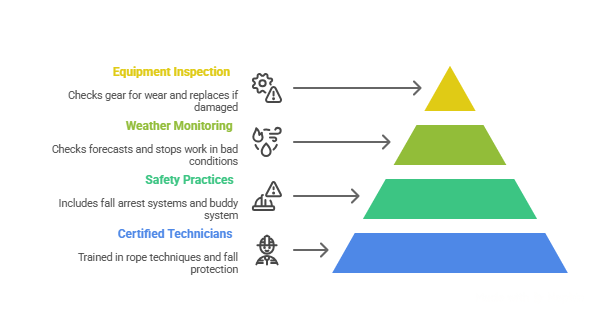
Key safety practices include:
- Personal Fall Arrest Systems: Each worker wears a full-body safety harness connected to strong anchors. OSHA rules require secure anchors (often rated for at least 5,000 pounds) and backup lifelines to catch someone if a primary line fails.
- Buddy System and Communication: Cleaners never work alone. A team always monitors each other, and radios or signals are used to coordinate.
- Weather Monitoring: Crews check forecasts and stop work if winds get too strong or if rain/ice makes the platform slippery. High-rise cleaners might not work if winds exceed safe limits.
- Equipment Inspection: Ropes, winches, and harnesses are checked before every job. Any sign of wear or damage means the gear is replaced immediately.
Because of this training and equipment, fatal accidents are very rare in high-rise window cleaning. Companies emphasize safety above all – building managers reduce liability by hiring contractors who follow all regulations and use insured, trained crews.
Risks, Cost and Scheduling
Cleaning skyscraper windows carries inherent risks and costs. Even with precautions, there’s always some danger of falls or dropped tools, so insurance and careful planning are musts. In fact, traditional high-rise cleaning is expensive: one industry source notes that the “equipment, labor, and specialized insurance” needed make it significantly pricier than normal window washing. This cost reflects the extra safety gear, skilled labor, and time involved.
Work is also weather-dependent. Wind can sway platforms or make ropes unstable, and rain can halt cleaning because wet glass is hard to wash without streaks. Companies often postpone jobs if conditions aren’t safe.
How often should a high-rise get cleaned? It varies. Many commercial buildings plan 2–4 cleanings per year on average. But the actual schedule depends on factors like:
- Location: A downtown tower near busy roads or in an industrial area will get dirtier faster than a rural one. Coastal buildings may suffer salt spray. City pollution and construction dust also dirty windows quicker.
- Weather and Climate: Frequent rain, wind storms, or pollen seasons can make windows accumulate grime. In dry dusty climates, a single storm can leave thick layers of dust.
- Building Use: Hotels, restaurants, or hospitals often clean windows more often (possibly monthly) to impress visitors, while a quiet office building might be on a biannual schedule.
In practice, a specialist company will survey the building, consider these factors, and recommend a cleaning interval. On the upper end, some landmark buildings in polluted cities even require monthly cleaning to maintain their appearance.
Why It’s Important for Building Owners
High-rise window cleaning isn’t just about looks – although appearance is a big part of it. Clean windows make a building look well-maintained and professional. Imagine a gleaming glass facade vs. one covered in dust and streaks – the shiny, spotless look impresses tenants and visitors. More sunshine also comes into the building through clear glass, which brightens offices and can boost occupants’ mood and productivity.
Beyond curb appeal, regular cleaning protects the windows themselves. Dirt, pollution, and acid rain can etch and weaken glass or corrode window frames over time. High-rise cleaning removes these harmful substances, extending the life of the windows. In other words, keeping windows clean is an investment: it helps avoid costly glass repairs or replacements later on.
In summary, whether you manage an office tower, hotel, or apartment skyscraper, understanding high-rise window cleaning is key. It involves trained crews using ropes, lifts, and safety gear to wash tall façades – a complex job that’s very different from regular cleaning. By hiring experts and following proper schedules, property owners can keep their buildings looking great, letting in natural light and protecting their investment in the long run.